What to Look At First
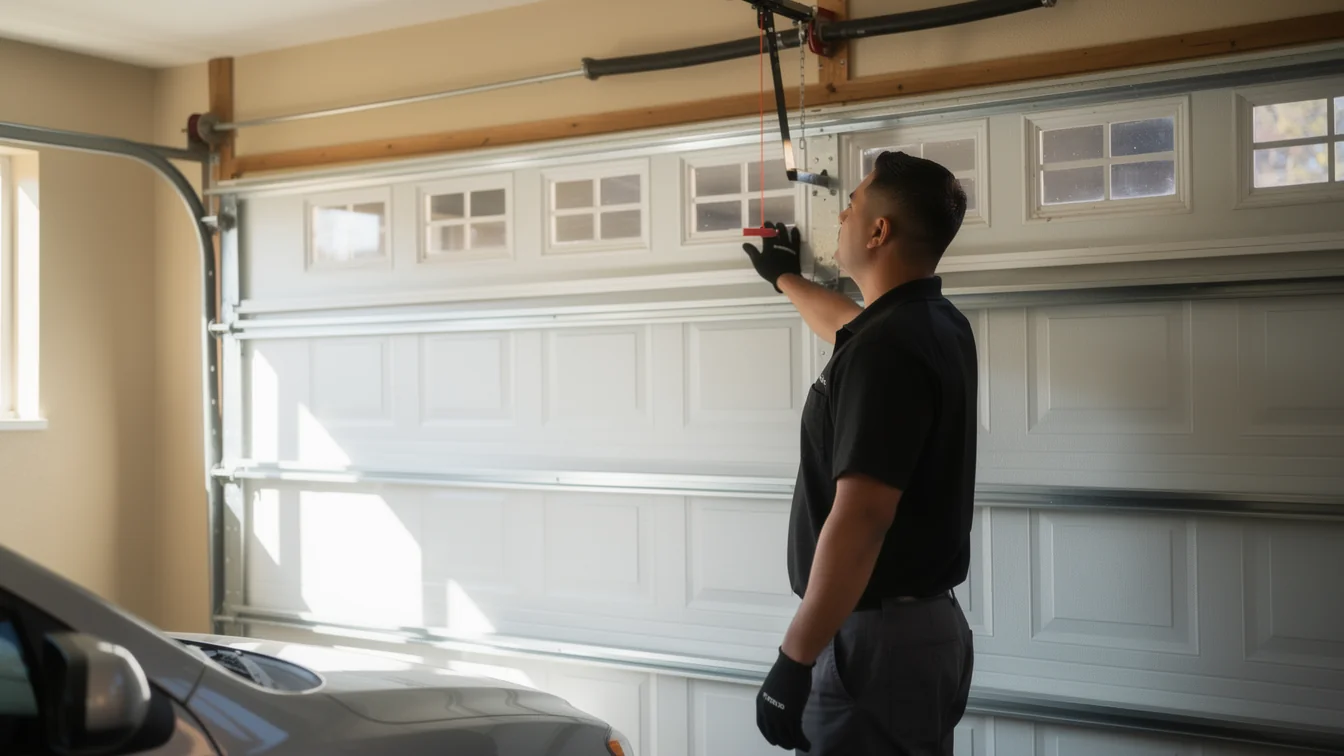
Start with the build date, not the symptom. Housing in North Canton runs from 1938 to 1994, with the median sitting at 1962, so a large share of doors on this side of Stark County are original steel panels on torsion hardware that nobody has touched since the house was framed. Look at the spring first - a single torsion spring on a single-car door, or a pair on a double, wound tight over a shaft above the opening. If it's rusted at the coil ends or the coil gap looks uneven, that's fifty-plus winters of flex talking.
Next check the bottom seal. Houses from that 1960s-70s stretch often got a basic rubber astragal that was never upgraded, and it hardens and cracks faster than people expect. Rollers are the third thing - steel rollers on nylon stems were standard then, and they wear a groove into the track that makes the door sound like it's grinding even when the spring and opener are fine.
If your opener predates the mid-1990s safety reversal rules, that's worth noting too, since a lot of houses in this age bracket still run original chain-drive units. None of this means replace everything - it means know what era you're dealing with before you call anyone, including us.
Leaving It Alone
Here's the honest limitation: if a torsion spring has already let go, do not touch it. That spring is holding the full weight of the door under tension, and houses from the 1960s-era stock we see most often have the heavier original steel doors, not the lighter modern panels - more mass, more stored energy in that coil. This is not a call for a ladder and a wrench.
There's also a point where a repair isn't worth it. If the door itself is the original steel single-layer panel from a house built near that 1962 median and the bottom two feet have rusted through from decades of winter runoff pooling at the slab, patching the spring or the roller doesn't fix the real problem - the panel is going. With median household income in the service area at $70,132, that's a real budget decision, and we'd rather tell you a replacement makes more sense now than have you pay twice.
We don't do cosmetic refinishing on original wood-look steel doors from that era - once the embossing is rusted through, paint won't save it. That's a job for a new door, not a repair call.
What Local Conditions Do
North Canton sits in a climate band rated cold and severe, and that matters more for a garage door than most people think. Steel contracts in the cold, and a torsion spring that's already fatigued from decades of cycling gets brittle faster when the shaft and coil sit at or below freezing for weeks at a stretch. That's why the classic call here is a spring that snaps on the first hard cold morning of the season, not during a mild stretch in October.
The cold also affects the opener. Chain-drive units common in houses from the 1960s-70s stock slow down when the gear grease thickens in an unheated garage, and the opener's force setting - tuned years ago for a lighter load - starts fighting a door that's harder to lift in the cold. Homeowners read that as a motor problem when it's really a mechanical drag problem made worse by temperature.
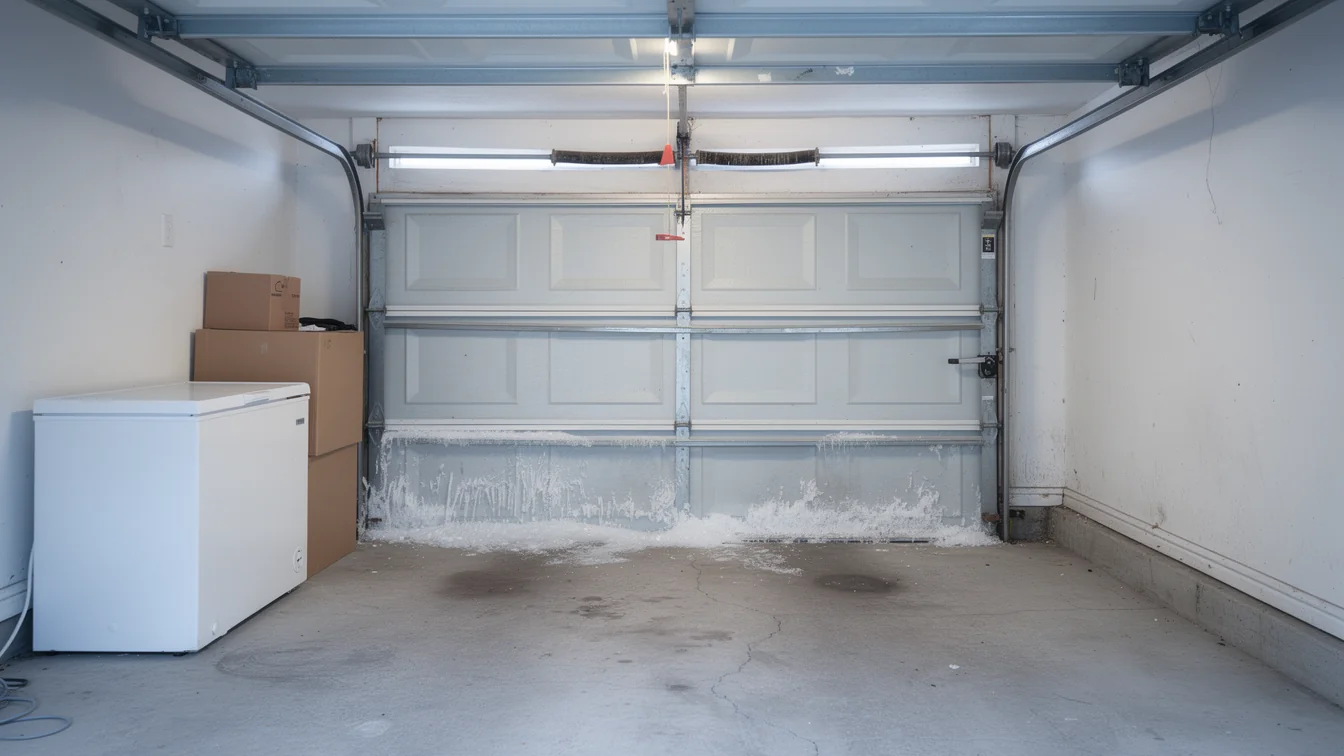
Moisture matters too. Freeze-thaw cycling pushes water into any gap in an old bottom seal, and that water re-freezes against the slab, which is part of why the seal check above isn't cosmetic - it's the first line against ice locking the door to the floor overnight.
What Is Going On
Put the pieces together and the pattern across this service area's roughly 47,943 households is consistent: original-era hardware, built for a different decade's door weight and never fully updated, meeting a cold-severe climate that accelerates metal fatigue. The spring doesn't fail because it's defective - it fails because it's been flexing since a house built around 1962 was new, through winters it was never going to get stronger from.
Across the 27 named areas that make up this older 1960s-70s housing stock, the repeat pattern we see is a spring failure followed, a season or two later, by a roller or track issue as the door's balance shifts and puts uneven load on the track. They're connected failures, not separate ones.
The fix usually isn't exotic. It's matching spring wire size and wind to the actual door weight - which on an original steel door from this era is often heavier than people assume - and checking that the opener's force setting and the track alignment haven't drifted as a result. None of this needs a full teardown in most cases. It needs someone who checks the whole system instead of just the part that broke.
Talk to a local pro
Garage door trouble in North Canton?
Same-day service with honest, upfront quotes.