What to Look At First
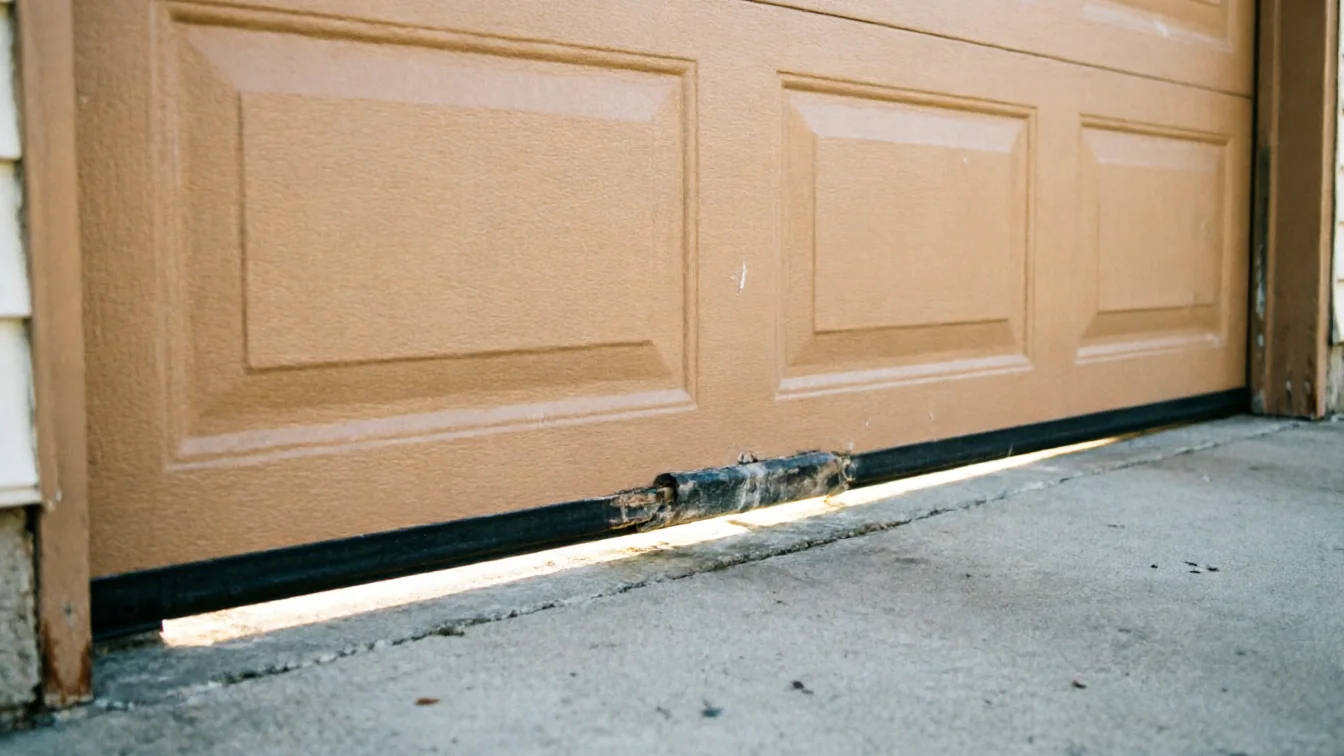
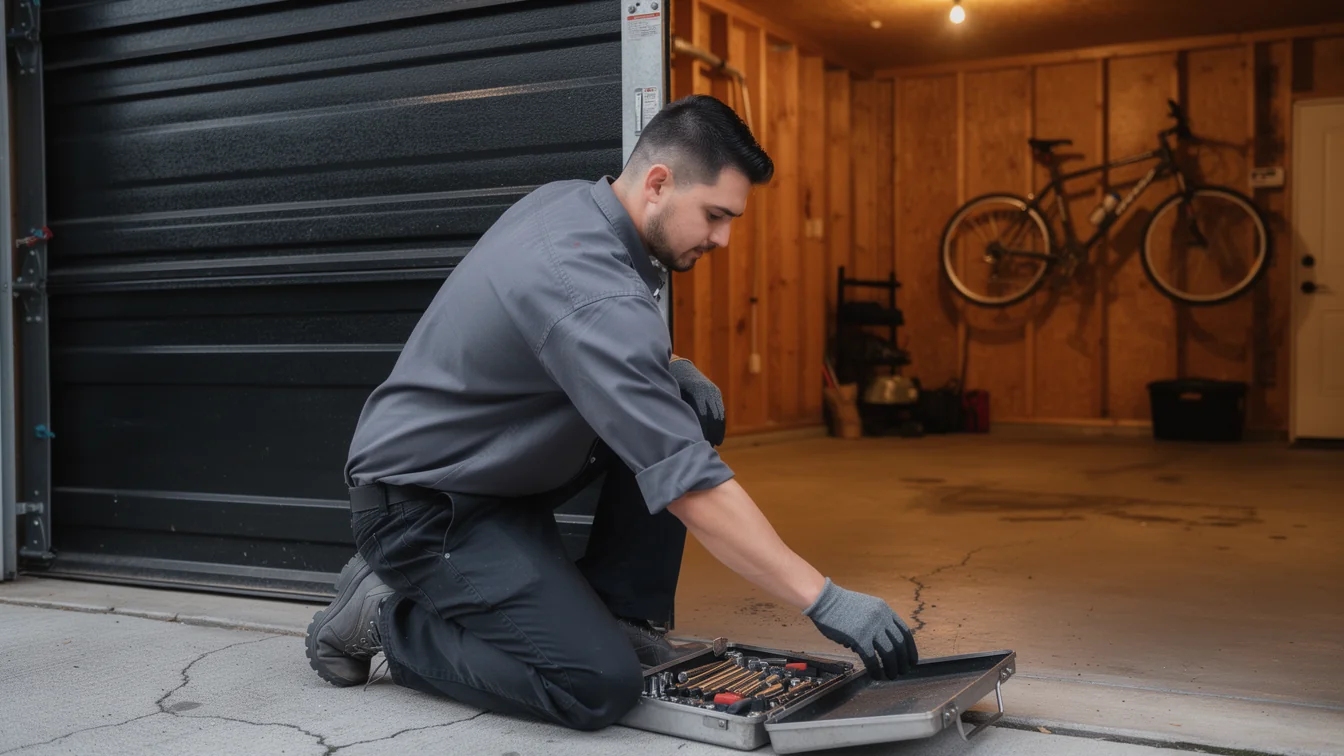
Start at the rollers, not the track. On a house built in the 1960s - which covers a lot of this area, since the housing stock here runs 1938 to 1994 with a median year of 1962 - the rollers are usually the original steel ones or an early nylon replacement, and after sixty-plus years of expansion and contraction they wear unevenly. Look at the bottom roller on each side of the door while it's down. If one sits deeper in its bracket than the other, or the bracket itself is bent, that's your off-track cause before you ever touch the track rails. Next, check where the vertical track meets the horizontal curve near the ceiling - that bend is where an older door, with its heavier wood or early steel panel, puts the most stress. A door that's been fine for decades can start skipping that corner once a bracket loosens a quarter inch. Don't skip the obvious: open the door by hand (disconnect the opener first) and feel for binding. If it drags at one spot every time, that's a track issue. If it swings loose at the bottom, that's a cable or roller issue wearing the track sideways.
Leaving It Alone
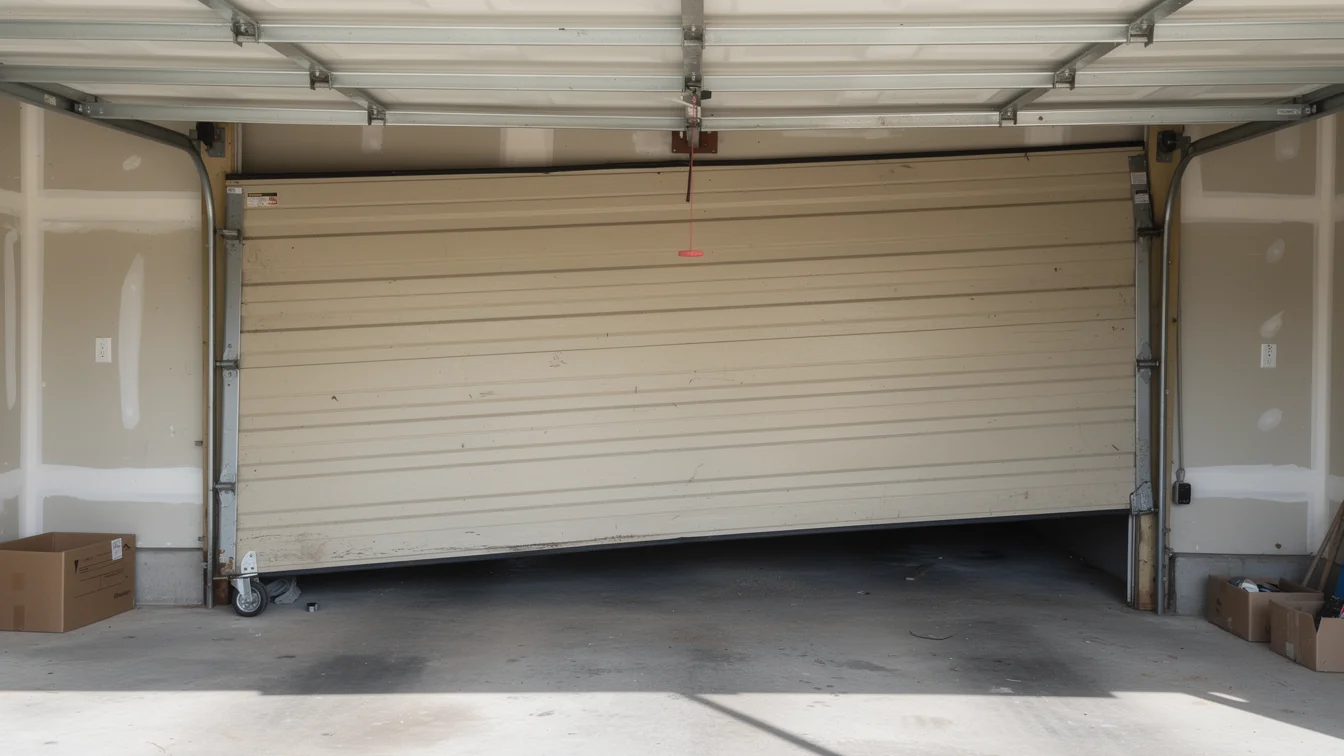
Not every off-track door needs a same-day service call, and we'll say so plainly: a door that's only slightly misaligned, still moving, and not grinding metal-on-metal can usually wait a few days if you're careful with it. We'd rather tell a homeowner to stop using the opener and operate it by hand gently until we get there than have them push a $70,000-median-income household into an emergency rate for something that isn't urgent. What you should not leave alone is a door that's jumped the track entirely, a cable that's frayed, or a spring under visible strain - those get worse fast and can hurt someone. The honest limit here: if a track is bent badly enough to need replacement, we're not going to hammer it straight and call it fixed. On doors this old, a warped track usually means the rollers and hinges nearby are tired too, and patching one part while ignoring the rest just means another call in a few months.
What Local Conditions Do
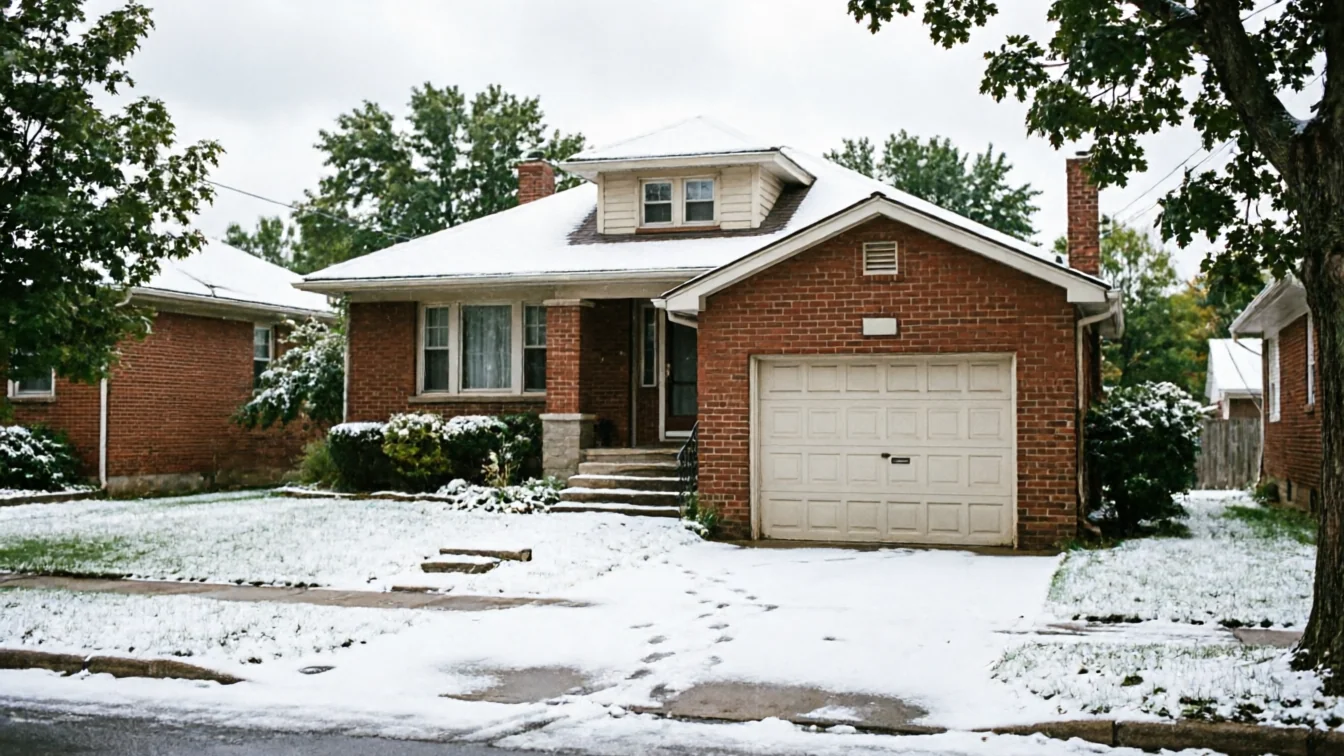
This area sits in a cold climate zone with severe winter conditions, and that matters more for an off-track door than most people think. Steel track rails contract in deep cold, which tightens tolerances that were already loose from decades of use. A roller that rode fine in August can bind in January because the metal around it has drawn in slightly. Ice is the other piece - meltwater off the bottom panel refreezes at the base of the track, and if a door closes onto even a thin ridge of ice, it can force the bottom roller out of the rail on that side. We see this pattern most on doors with original or early hardware, which is common given the 1938-to-1994 build range across this service area. A door on 2015 hardware shrugs this off. A door that's still running 1960s-era track and rollers does not, and that's a big share of what's out there.
What Is Going On
Put it together and most off-track calls in this area trace back to the same two things stacking up: hardware that's old enough to have lost its tolerances, and a winter that exploits that looseness. Across the 27 communities we cover - Greentown, Uniontown, Hartville, Louisville, and the rest out to Orrville - the housing is overwhelmingly 1960s and '70s construction, built before current track and roller standards existed. None of that is a flaw in the original work; it's just sixty years of thermal cycling and ice doing what it does to steel. The fix is rarely just shoving the door back onto the rail. We check the bracket alignment, the roller condition, and whether the track itself has developed a permanent bow from repeated cold-weather stress, because putting a worn roller back into a track that's already starting to spread just buys you the same call again next January.
Talk to a local pro
Garage door trouble in North Canton?
Same-day service with honest, upfront quotes.